


Use of innovative models in psychiatry – MENPs-DAT
The MENPs-DAT group is an interdisciplinary research team integrating psychology, neuroscience, biotechnology, nanomedicine, and engineering to investigate the biological mechanisms underlying vulnerability to brain disorders and to develop innovative precision-based therapies. Our research focuses on how genetic predisposition, environmental stress, and dopaminergic dysfunction interact to increase susceptibility to neuropsychiatric and neurodegenerative disorders.
Using advanced translational models, we study the neural and molecular mechanisms driving maladaptive brain function while developing novel therapeutic strategies based on wireless neuromodulation, magnetoelectric nanoparticles (MENPs), and precision brain targeting.
Through strong national and international collaborations, we bridge fundamental neuroscience, neurotechnology, and clinical translation with the long-term goal of preventing disease progression and improving outcomes across a broad range of brain disorders.
CV Prof. Marta Pardo Andrés


Dr. Marta Pardo Andrés is a Ramón y Cajal researcher at the University of Valencia. Her research focuses on developing innovative therapies for psychiatric and neurodegenerative disorders by integrating translational neuroscience, dopaminergic animal models and nanomedicine. She leads research on magnetoelectric nanoparticles (MENPs), a technology enabling wireless brain targeting and neuromodulation through externally applied magnetic fields. Her work explores MENPs as precision tools for drug delivery, neural stimulation and the treatment of Parkinson’s disease and other brain disorders. Her group also investigates dopamine transporter dysfunction, stress vulnerability and neuroplasticity using translational animal models to identify new therapeutic strategies.
Dr. Pardo is also Co-founder and Scientific Lead of AEQUA Nanotherapeutics, leading the scientific development and clinical translation of MENP-based therapies. She first proposed MENPs for these indications and established the in vivo preclinical framework underpinning the company’s translational programme.
Research Lines

Development of magnetoelectric nanoparticle-based approaches for brain targeting and neuromodulation.
Study of dopaminergic vulnerability and stress-related mechanisms using translational animal models (Dopamine transporter (DAT) rats).
Highlighted Funding
Use of magnetic nanoparticles for the treatment of Parkinson’s Disease. PID2023-149197OA-I00. Agencia Estatal de Investigación (AEI). 2024-2027. Marta Pardo.
Use of Innovative Resources (Magnetoelectric Nanoparticles, MENPs) for the Study and Treatment of Psychiatric and Neurodegenerative Disorders. RYC2022-035438-I. Agencia Estatal de Investigación (AEI). 2024-2028. Marta Pardo.
Impact of Early Stress in Adolescence: An Innovative Translational Model to Study the Effects of Exercise and the Glutamatergic Pathway in Genetically Vulnerable Individuals. KOPLOWITZ-2024. Fundación Alicia Koplowitz. 2024-2026. Marta Pardo.
Early Stress and Genetic Vulnerability in Addictive Behaviour. PND2025-I031. Ministerio de Sanidad. 2026-2027. Marta Pardo.
Red de Investigación de Atención Primaria en Adicciones (RIAPAd). RD24/0003/0004. Instituto de Salud Carlos III. 2025-2027. Marta Pardo.
Use of Magnetoelectric Nanoparticles for Brain Targeting. University of Miami, McGowen research fund. 2018-2020. Marta Pardo.
Dopamine Transporter Transgenic Rats as a Novel Model of Stress Vulnerability and Addiction. University of Miami, McGowen research fund. 2017-2019. Marta Pardo.
Highlighted Publications
Zhang, E.; Shotbolt, M.; Abdel-Mottaleb, M. et al. Magnetoelectric Nanoparticle-Based Wireless Brain-Computer Interface: Underlying Physics and Projected Technology Pathway. Advanced Science. 2026. 24329. https://doi.org/10.1002/advs.202524329
Yi, Y.; Zhao, Y.; Wang, H. et al. Phosphorylation of CREB in the Central Amygdala Regulates Negative Affective Behaviors During Morphine Withdrawal. The Journal of Neuroscience. 2025. 45, 1934242025. https://doi.org/10.1523/JNEUROSCI.1934-24.2025
Pardo, M.; Roberts, E. R.; Pimentel, K. et al. Size-dependent intranasal administration of magnetoelectric nanoparticles for targeted brain localization. Nanomedicine: Nanotechnology, Biology and Medicine. 2021. 32, 102337. https://doi.org/10.1016/j.nano.2020.102337
Giménez, S.; Millan, A.; Mora-Morell, A. et al. Advances in Brain Stimulation, Nanomedicine and the Use of Magnetoelectric Nanoparticles: Dopaminergic Alterations and Their Role in Neurodegeneration and Drug Addiction. Molecules. 2024. 29, 3580. https://doi.org/10.3390/molecules29153580
Vilca, S. J.; Pardo, M.; Borràs, E. et al. DAT Knockout Rats Display Epigenetic Alterations in Response to Cocaine Exposure. Biomolecules. 2023. 13, 1107. https://doi.org/10.3390/biom13071107
Pardo, M.; Khizroev, S. Where do we stand now regarding treatment of psychiatric and neurodegenerative disorders? Considerations in using magnetoelectric nanoparticles as an innovative approach. WIREs Nanomedicine and Nanobiotechnology. 2022. 14, 1781. https://doi.org/10.1002/wnan.1781
Pardo, M.; Vilca, S. J.; Borràs, E. et al. Heterozygous DAT Knockout Rats Display Enhanced Cocaine Locomotor Response and Self-Administration Accompanied by Differential Activation of ERK Signaling and Immediate Early Genes. International Journal of Molecular Sciences. 2022. 23, 15414. https://doi.org/10.3390/ijms232315414
Illiano, P.; Leo, D.; Gainetdinov, R. R. et al. Early Adolescence Prefrontal Cortex Alterations in Female Rats Lacking Dopamine Transporter. Biomedicines. 2021. 9, 157. https://doi.org/10.3390/biomedicines9020157
Illiano, P.; Bigford, G. E.; Gainetdinov, R. R. et al. Rats Lacking Dopamine Transporter Display Increased Vulnerability and Aberrant Autonomic Response to Acute Stress. Biomolecules. 2020. 10, 842. https://doi.org/10.3390/biom10060842
Pardo, M.; Cheng, Y.; Velmeshev, D. et al. Intranasal siRNA Administration Reveals IGF2 Deficiency Contributes to Impaired Cognition in Fragile X Syndrome Mice. JCI Insight. 2017. 2, e91782. https://doi.org/10.1172/jci.insight.91782
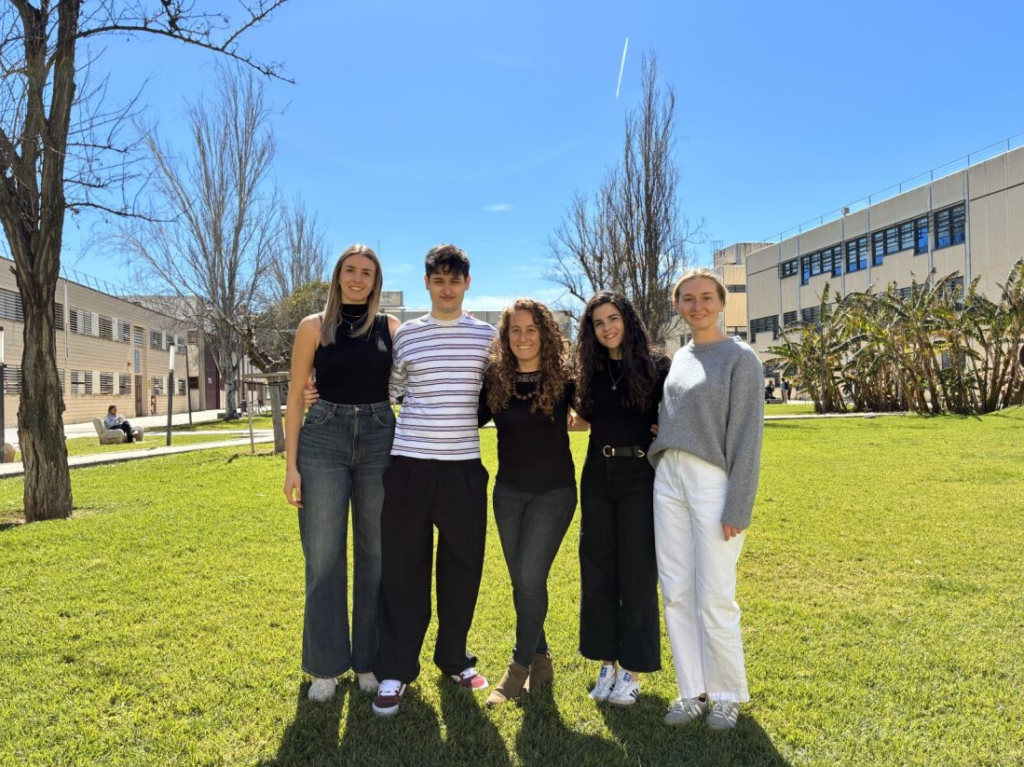
Caterina Azais Tatistscheff
Álvaro Colomina Núñez
Marina Esteve Silvestre
Silvia Gimenez Gómez
Dra. Paula Matas
Antonio Perrote